






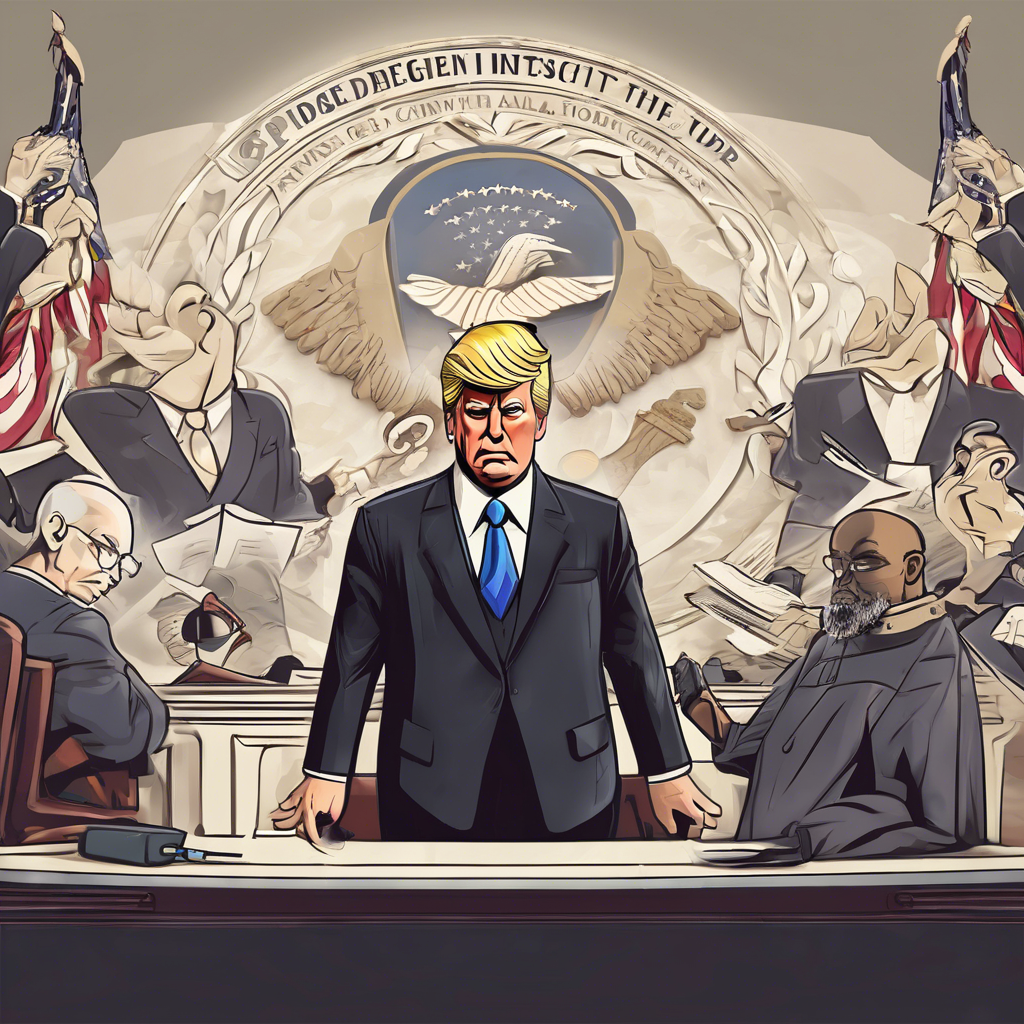
Legal Stand-off: Judge Rules Trump Lacked Authority to Dismantle the U.S. Institute for Peace
In a striking legal turn that reverberates through political and diplomatic circles, a federal judge ruled that former President Donald Trump did not possess the authority to dismantle the U.S. Institute of Peace (USIP). Established in 1984, USIP plays a pivotal role in promoting international peace and conflict resolution, a mission that has come under scrutiny amid shifting political tides. This ruling raises not only constitutional questions but also prompts a pivotal debate about the boundaries of presidential power. ⚖️
The Context of Power: What Does the Ruling Mean?
At the heart of this case lies a broader question regarding the executive branch’s limits—specifically, whether a president can unilaterally dissolve federal agencies created by Congress. The ruling reaffirms a key principle of American governance: that checks and balances are vital to upholding democracy. According to legal experts, this sets an important precedent not just for Trump but for future presidents attempting to wield similar authority.
“Separation of powers is not just a theory; it’s the backbone of our Constitution,” stated constitutional law scholar Dr. Karen McKenzie. “This ruling serves as a reminder that the President cannot act as a monarch, dismantling institutions at will.” 📜
A Deeper Dive into the U.S. Institute of Peace
The USIP has stood at the forefront of American foreign policy initiatives aimed at conflict prevention and peacebuilding. With an operational budget approaching $40 million, it operates globally, coordinating efforts between government agencies, NGOs, and international organizations to mitigate crises before they escalate into violence. It conducts research, provides education, and actively engages with communities embroiled in conflict.
This ruling brings heightened attention to the agency, which many believe is essential amid escalating global tensions, including ongoing conflicts in the Middle East and the rise of authoritarianism worldwide. In a statement following the ruling, current USIP President Nancy Lindborg emphasized the importance of the institute: “USIP embodies our nation’s commitment to peace, diplomacy, and effective conflict resolution.” 🌍
The Political Landscape: Reactions from Across the Spectrum
The ruling garnered immediate reactions from both political sides. Democrats hailed the decision as a significant affirmation of institutional integrity, while some Republicans voiced concern over what they deem governmental overreach. The implications of this case could influence the ongoing discourse surrounding executive power within the context of Congress and its ability to protect its own institutions.
Political analyst Jake Hawthorne commented, “This ruling serves as a pivotal moment in the ongoing tug-of-war between the branches of government. It may reshape our understanding of executive authority for years to come.” 🏛️
The Road Ahead: Implications for Future Leadership
Does this ruling signify the beginning of a new era of accountability for executive actions? Only time will tell, but it undoubtedly reinforces the notion that American democracy is a continually evolving framework where power is contested, challenged, and ultimately defined by actions and ideals—a legacy fundamental to the nation’s ethos. 🇺🇸

Whats next, a reality show called Trump vs. Judge? Cant wait for the drama to unfold! #TeamJudge #PeaceInstituteDrama
I think Trump should start his own peace institute and outshine the USIP. Lets see who does it better! 🕊️✌️ #peacechallenge
I dont get why everyones freaking out about Trump and the U.S. Institute for Peace. Lets focus on more important issues, like puppies or pizza toppings.
This ruling on Trumps authority sparks debate – a power play or a necessary check? Whats your take? Lets discuss!
I think Trump should start a peace institute of his own. Imagine the drama and tweets that would come out of that! 😂
I cant believe the judge ruled against Trump! What a plot twist in the political drama. Cant wait to see how this unfolds.
I dont get why people are so worked up about the U.S. Institute of Peace. Cant we focus on more pressing issues?
I think Trump should start his own peace institute and show them whos boss! Who needs authority anyway? #TrumpPeace2020
Peace should come from diplomacy, not ego-driven power plays. Lets aim for real solutions. #DiplomacyOverEgo
Is it just me or is this whole U.S. Institute of Peace drama giving off major reality TV vibes? 🍿 #TeamJudge #TrumpVsPeace
I think Trump should start a reality show instead of dismantling peace institutions. Drama sells, right? #MakeRealityTVGreatAgain
I think Trump should start a peace institute of his own. Lets see some creative competition in the peace-making business!
I dont get why everyone is so worked up about this. Trump was just trying to clean house, right? #controversialopinions
Wow, so Trumps authority is being questioned? Thats a twist! Wonder how this will play out in the political landscape.
Wow, this ruling on Trump and the U.S. Institute for Peace is stirring up some serious debate! Whats your take on the implications of this decision?
Its about time someone held Trump accountable for his actions. The implications are long overdue.
Wow, Trumps authority getting challenged? This ruling on the U.S. Institute for Peace is shaking things up! Whats next?
Who knew Trumps power could be challenged like this? Whats next, a reality show judge presiding over political decisions? 🤔
This ruling could set a precedent for limiting presidential power. What do you think about the implications for future administrations?
Wow, this ruling on Trump and the U.S. Institute for Peace is stirring up some serious debates. Whats your take on it?
I find it intriguing how this ruling on USIP challenges Trumps authority. What impact will this have on future presidential decisions?