






Montgomery County Public Schools to Implement Comprehensive Cellphone Ban 📵🏫
In a move that echoes the quaint nostalgia of a pre-smartphone world, Montgomery County Public Schools are set to enforce a bell-to-bell cellphone ban this fall. It’s as if the fabric of the space-time continuum has folded back to a simpler era when telephones wore cords and bells rang to summon recess, not the latest TikTok trend. But what lies beneath this seemingly draconian decree in an age of glowing screens and digital whispers?
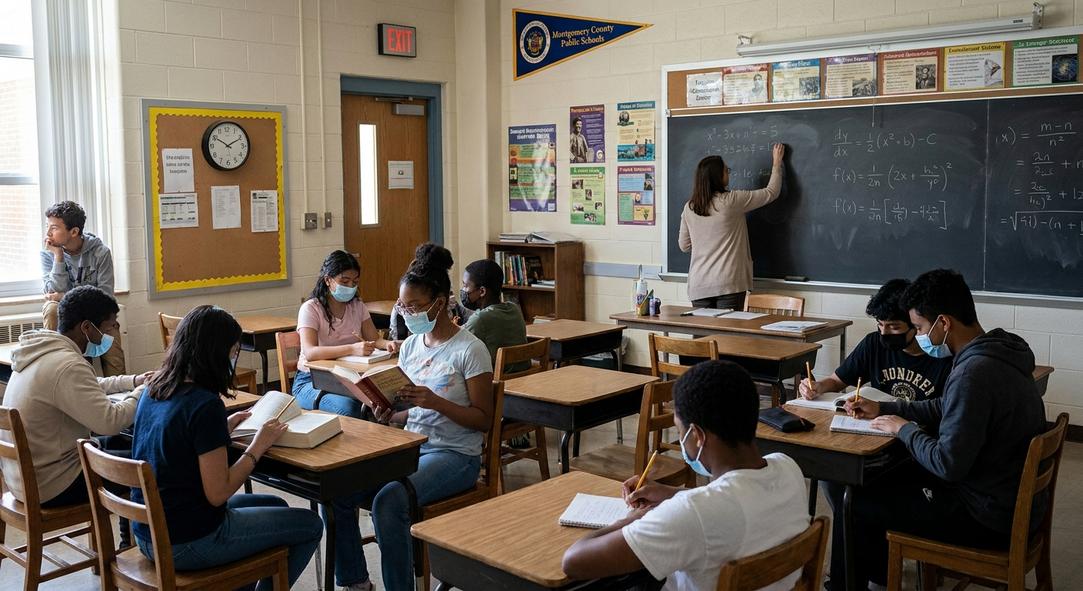
The decision, cloaked in the rationale of enhanced academic focus and improved social interaction, raises a straightforward question: Can students truly return to a semblance of analog existence, or will this detachment merely swap one distraction for another? As the walls of the classroom become the fortress against the digital siege, educators are hopeful that this slightly monastic approach might mitigate the “dings” and “buzzes” that operate like relentless pied pipers, leading students down rabbit holes of distraction. 🎶
The Educational Battlefield: Screens vs. Serenity 📚⚔️
Metaphorically speaking, this phone ban stands as a lighthouse in a tempest, guiding lost sailors—students—away from the rocky shores of disruption. But while one might argue that discipline and silence are conducive to learning, others propose that the clamor of technology is a requisite skill for the digital age. Herein lies the striking antithesis: fostering concentration in a time that demands multitasking.
Empirical data suggests that consistent smartphone use can indeed fracture attention spans as effortlessly as a pebble shatters a mirrored lake. Reports from the American Psychological Association highlight a growing concern over decreasing attention spans, positing that the smartphone, like the Sirens of myth, seduces with the promise of illimitable information and connection, yet delivers fragmentation. Yet, is banning them the proverbial cure, or merely a Band-Aid on a deeper systemic issue?
Unveiling the Rationale: Promises and Paradoxes
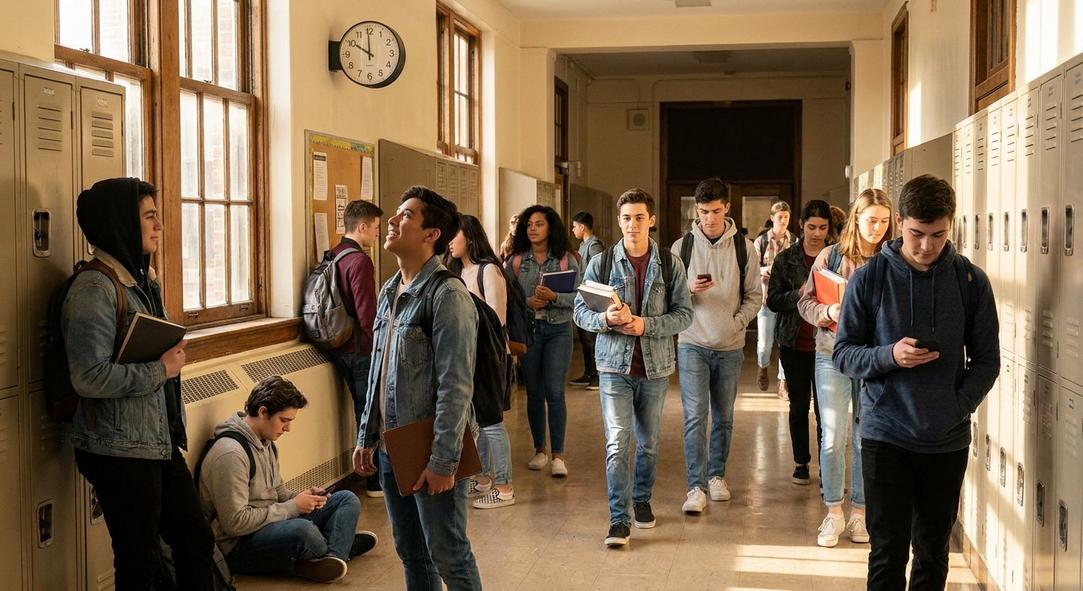
At the core, Montgomery County’s new policy gleams with the promise of restoring face-to-face interaction, envisioning hallways not filled with bowed heads over lit screens but with animated dialogue and laughter. The administration hopes this restriction will inspire students to engage more with each other and the world around them, casting their eyes not downward into the digital abyss but upward toward the shared sky of human connection 🤝.
A survey conducted by the Pew Research Center indicated that 54% of students acknowledge their smartphones as a source of distraction during class time. Montgomery County’s strategic act aims to upend this statistic, fostering a learning environment akin to “a garden untended by weeds,” where focus flourishes.
- Academic Performance: Proponents argue the ban will bolster test scores and classroom engagement.
- Psychological Well-being: Reducing screen time is intended to alleviate stress and increase mindfulness.
- Social Skills: A move to recalibrate real-world social dynamics away from virtual platforms.
And yet, there exists a paradox. In a world hurtling toward total connectivity, schools risk becoming the sole sanctums of disconnection. Will this act of technological abstinence indeed enrich, or will it stifle an essential skill set in an innovation-driven era?
The Larger Picture: Shaping Tomorrow’s Citizens
Beyond the immediate, Montgomery County’s decision may shape how future generations perceive the role of technology. Will they come to see their digital companions—not as extensions of themselves—but as tools meant to serve a purpose? Or will this experiment in abstinence simply lead clandestine phone users into the underbellies of school bathrooms, the last refuge of unsupervised scrolling and secret selfies 🚻🤳?
It seems we are presented with the perennial challenge: to walk the tightrope between the harnessing of technology and preserving the sanctity of the learning environment. This bell-to-bell ban may indeed be revolutionary—or perhaps it is simply a testament to our perpetual quest for balance in a world that spins ever faster.