






Food Airdropped Into Gaza as Starvation Deaths Rise 🍞✈️
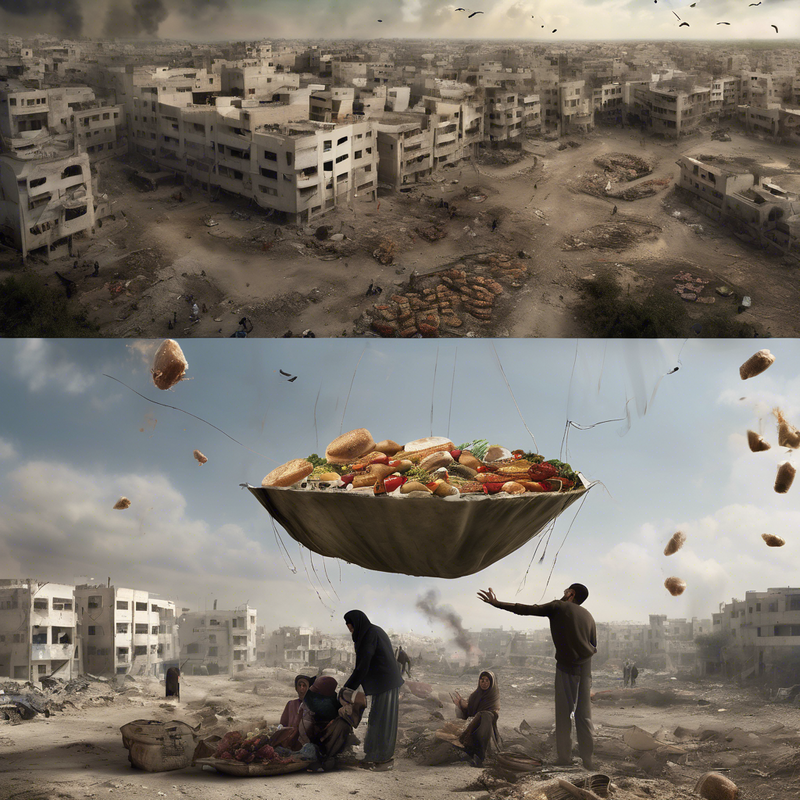
The desert sky above Gaza has turned into an unlikely theater for humanitarian relief. With starvation deaths escalating alarmingly, food is now being airdropped—underscoring the tragic irony of modern warfare. In a region where bread is often seen as a luxury far removed from daily existence, the airdrop is a potent reminder of how conflict and humanitarian crises can transform necessity into spectacle, drawing another stark antithesis between the abundance of food in some areas of the world and the devastating shortage in others.
The Invisible Famine
As conflict rages on, millions of Gazans face starvation, not unlike flowers wilting under an unrelenting sun. UN reports indicate that upwards of 1.5 million people are now on the brink of famine, with rates of malnutrition among children skyrocketing. This humanitarian disaster raises urgent questions: How did we get here? What does it mean to drop food from planes when hunger on the ground is so palpable?
Ironically, despite living in a world of technological marvels, the residents of Gaza experience a contradiction where food falls from the sky even as they cannot access it on the ground. Airdropping supplies might momentarily alleviate suffering, but it can’t address the entrenched socio-political factors fueling their plight. This method of intervention could be likened to placing a band-aid on a gaping wound—temporary relief in a situation that demands a deeper, systemic change.
Behind the Curtain: A Complex Geopolitical Landscape
The airdrops, while well-intentioned, expose the complexities of international response in conflict zones. Nations that send aid often have their own political agendas—think of it as a game of chess where each piece carries the weight not of strategy, but of suffering. The irony lies in the fact that those who orchestrate aerial food deliveries often have the means to mitigate the entire crisis through diplomatic engagement.
Governments and NGOs scramble to manipulate the narrative, presenting the airdrops as a success story, even as the underlying issues remain unsolved. Diplomacy, it seems, gets lost in translation while airplanes fly overhead sprinkled with life-sustaining food. The question looms: Are these actions genuinely altruistic, or merely a way to soothe the global conscience amidst escalating news cycles of suffering?
A Breach of Humanity: The Bid for Solutions
Airdropped food is, without a doubt, a vital lifeline. Yet, as the dust settles from each cargo drop, the urgency persists: What happens once the crates are empty? Rhetorical questions aside, the answer implies a shift in both policy and perception. Less dramatic, but far more profound, is the need for long-term infrastructure solutions that can support agriculture, restore local economies, and build resilience in Gazan society.
In a region where families forage for scraps, the idea that food could rain down like manna from heaven might temporarily mask the devastation, yet it cannot replace the need for sustainable access to fresh and nutritious food. Community gardens and local fishing initiatives, neglected for far too long, may provide hope just as real as the food falling from the sky.
The Future: A Fork in the Road
As the world watches, how do we transform this humanitarian crisis into an opportunity for genuine change? The paradox resides in the bridge between charity and empowerment—an ideological chasm that has yet to be sufficiently addressed by stakeholders on either side of the debate. Will we continue to send food from the air like breadcrumbs, or will we invest in restoring dignity and self-sufficiency on the ground? Perhaps the biggest irony of all is that the choice remains, ironically, ours to make.
Ultimately, while planes deliver food to Gaza, the vast need for holistic strategies continues undeterred. The airspace may be filled with the hope of sustenance, but it is the ground beneath that yearns for stability and peace. The humanitarian crisis in Gaza isn’t just about the food—it’s about a future where communities can thrive, not merely survive.



Is airdropping food in Gaza a genuine solution or just a band-aid on a larger issue? Lets discuss.
Is airdropping food in Gaza truly effective or just a band-aid solution? Lets discuss the complexities behind this humanitarian issue. 🤔🌍
Is airdropping food in Gaza really helping or just a PR stunt? Lets discuss the real impact! 🍞✈️ #FoodForThought
Is airdropping food in Gaza a genuine effort or a symbolic gesture? The debate is on! Whats your take? 🍞✈️ #FoodAirdropDebate
Symbolic. Real change requires addressing root causes. #FoodAirdropDebate
Isnt airdropping food into Gaza just a band-aid solution? What about addressing the root causes of the famine? 🤔🌍 #FoodForThought
Is airdropping food in Gaza a genuine solution or just a Band-Aid on a much larger wound? Lets discuss 🤔🍞
Is dropping food from the sky a genuine solution or a mere symbolic gesture in Gaza? Lets discuss! 🤔🍞✈️
Is airdropping food into Gaza a true solution or just a band-aid on a deep wound? Lets dig deeper! 🤔🍞 #FoodForThought
Is airdropping food in Gaza a genuine effort or just a band-aid solution? Lets discuss the complexities behind this humanitarian gesture. 🤔🌍 #FoodAidDebate
Is airdropping food in Gaza truly a solution or just a Band-Aid on a bigger issue? Lets discuss! 🤔🍞✈️ #FoodAirdropDebate