






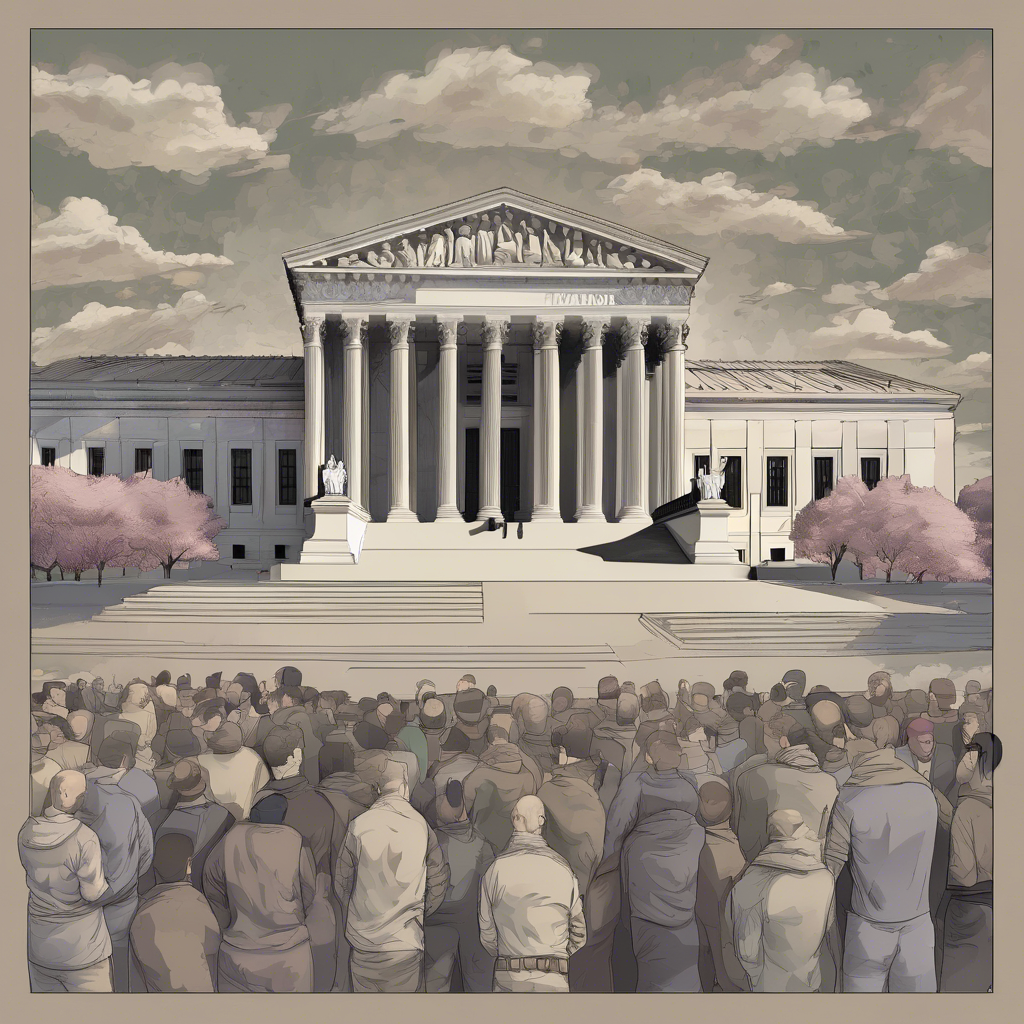
Supreme Court’s Controversial Ruling: Military’s Transgender Troop Ban Continues
The recent decision by the U.S. Supreme Court to permit the military’s ban on transgender troops to persist amid ongoing legal challenges has ignited a firestorm of debate across the nation. 🌐 With implications that reach beyond the courtroom, this ruling reflects deeper societal attitudes towards gender identity, inclusivity, and military readiness.
The ban originated in 2017 when former President Donald Trump announced that individuals identifying as transgender would be barred from serving in the military, a directive widely criticized as discriminatory and harmful. Subsequently, federal courts have been engaged in a complex legal battle over the rights of transgender individuals in the armed forces, culminating in this pivotal Supreme Court decision.
Context and Impact of the Ruling
The Court’s decision, which allows the Trump-era policy to remain in effect while cases concerning its legality continue to unfold, raises significant questions about the intersection of identity and military policy. Supporters of the ban argue it is necessary to maintain “unit cohesion” and operational effectiveness. However, opponents contend that this rationale is rooted in outdated stereotypes and unfounded fears. 🏳️⚧️
Numerous studies, including a comprehensive report from the American Medical Association, suggest that allowing transgender individuals to serve openly not only promotes equality but also enhances unit performance. Evidence indicates that diverse teams outperform homogeneous ones, especially in high-stress environments where adaptability and resourcefulness are critical. 📈
Legal Landscape and Future Challenges
The Supreme Court’s ruling came amid several lower court decisions that found the ban unconstitutional. The Justices are set to review cases that challenge the legality of such discriminatory practices. Legal experts anticipate that the Court’s eventual decisions could redefine Constitutional protections against discrimination based on gender identity.
“This ruling signals a troubling precedence where military policy is influenced by political decisions rather than the underlying principles of equality that America stands for,” states legal scholar Dr. Judith Green. ⚖️
The ongoing legal fight has galvanized advocacy groups, with organizations such as the Human Rights Campaign vowing to continue their efforts in court and through public awareness campaigns. Many advocates argue that allowing transgender troops to serve openly is not merely an issue of rights but of fulfilling the military’s obligation to recruit from the entire pool of eligible individuals, as qualified personnel are essential for national security. 🌍
Public Sentiment and Military Morale
Public opinion appears to be shifting toward acceptance. Recent surveys reveal that over 70% of Americans support allowing transgender individuals to serve in the military, reflecting broader societal changes concerning LGBTQ+ rights. However, military leaders express concerns about the potential impact on morale and operational efficiency.
- Inclusion versus Cohesion: Critics suggest that preventing individuals from serving based on gender identity undermines the foundational values of equality and inclusion that the military professes to uphold.
- Potential Backlash: Current service members and prospective recruits may be deterred by the military’s ban, leading to a talent shortfall, particularly in specialized units.
Conclusion: The Path Forward
As the military navigates these turbulent waters, the path forward will likely involve continued legal battles and societal pushback against the ban. The conversations ignited by the Supreme Court’s ruling will persist, shaping military policy and the broader dialogue about human rights and inclusivity. The outcome of these cases could become a defining moment not only for the military but for American society as a whole. 🗽
Transgender service members, like all in the armed forces, deserve the respect and dignity that comes with serving their country. Their fight for recognition and equality may soon enter a new chapter, one that could ultimately affirm the values that the military has long claimed to embody.
Wow, cant believe the Supreme Court is still debating this! Trans troops deserve to serve just like anyone else. #EqualityForAll
I think the Supreme Court made the right call. Military effectiveness should come first, not political correctness. Thoughts?
I think the Supreme Courts decision is a step backwards for equality. Transgender troops deserve to serve just like anyone else.
I think the Supreme Court made the right call. Lets focus on readiness and effectiveness rather than politics.
I cant believe the Supreme Court is still allowing the transgender troop ban. Its time for equality and inclusion in our military!
I believe the Supreme Courts decision on transgender troops is outdated and discriminatory. Everyone should have the right to serve their country.
I cant believe the Supreme Court upheld the ban on transgender troops. Its discrimination plain and simple. #EqualRightsForAll
I dont get why people are so worked up about transgender troops. Let them serve if they want to, its not a big deal.
I think the Supreme Court should focus on more pressing issues instead of debating transgender troop bans. Priorities, people!
I cant believe the Supreme Court upheld the transgender troop ban! Whats next for our military and LGBTQ+ rights? #StayInformed #DiscussingWithFriends
I cant believe this decision! Its like the Supreme Court is stuck in the past. What about progress and equality?
Progress is subjective. Maybe theyre preserving something valuable. Think beyond the surface.
I dont get why the Supreme Court would even consider banning transgender troops. Its like taking a step back in progress.
I cant believe the Supreme Court upheld the ban on transgender troops! Do you think its fair or discriminatory? Lets discuss!
What a rollercoaster of emotions! Cant believe the Supreme Courts decision on transgender troops. What are your thoughts on this shocking move?
I cant believe the Supreme Court upheld the ban on transgender troops. What happened to equality and progress? Such a disappointing decision.
Get with the times, equality doesnt exclude anyone. Different perspectives matter.