





Montgomery County’s Digital Dilemma: Enforcing the Cellphone Ban 📱✋
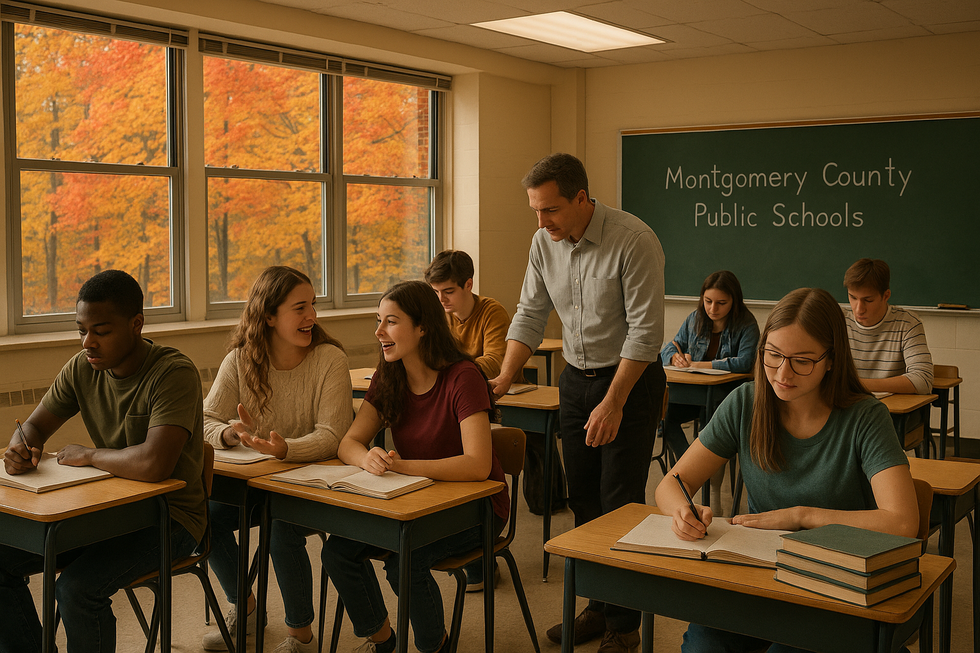
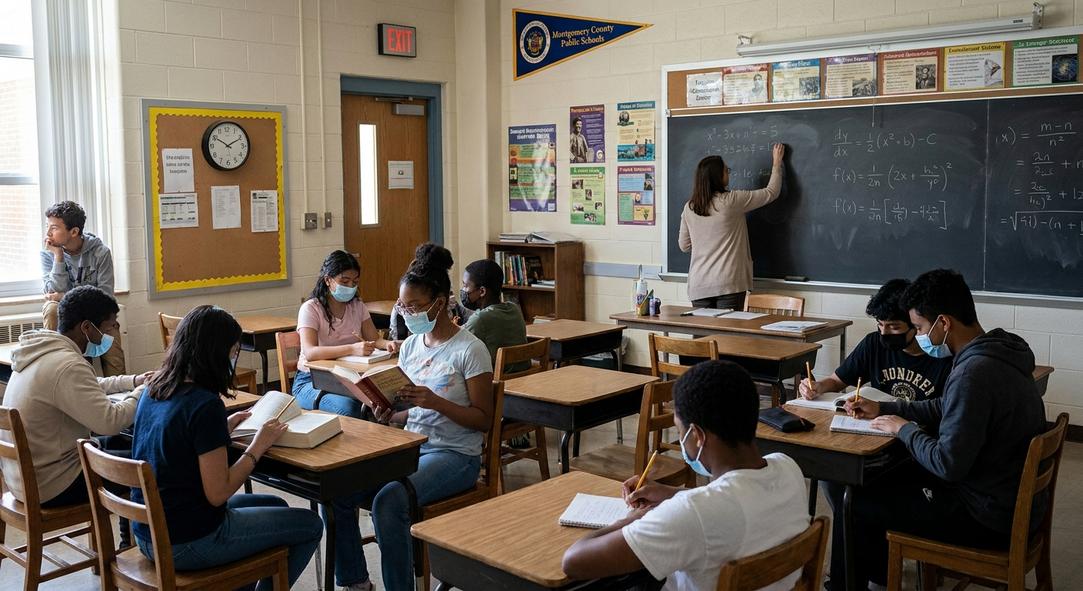
In a world hypnotized by the glow of smartphone screens, where “instantaneous” is the mantra, Montgomery County Public Schools (MCPS) has swung the pendulum into an unexpected realm this fall—an era where cellphones are exiled from the hallowed halls of learning, condemned to silence from bell to bell. 🛎️ But in this digital age, is such a ban akin to banning pencils in a scribe’s workshop?
Unpacking the Digital Paradox
Picture this: a classroom bustling not with vibrant discussions but an orchestra of keystrokes and snippets. To many, the ubiquitous presence of cellphones among students resembles a modern-day Medusa—mesmerizing and paralyzing. 📚 However, subtracting these alluring gadgets from education could be likened to plucking the feathers off a peacock, stripping away its vivid potential.
MCPS believes that this new ban will refocus students’ attention on their studies, reclaiming time that was once lost to texting and social media. But paradoxically, in seeking to free students from distraction, schools might just chain them to a uniform past, where the absence of technology also means missed educational opportunities.
The Antithesis of Progress and Regress
Consider the juxtaposition. In one corner, we have Silicon Valley giants emphasizing 21st-century skills, coding apps for toddlers, fostering an environment where knowledge is quite literally at one’s fingertips. On the opposite corner, Montgomery schools enforce a regime where these digital portals are firmly shut during school hours—a scenario as ironic as a bird refusing to fly in a sky brimming with thermals.
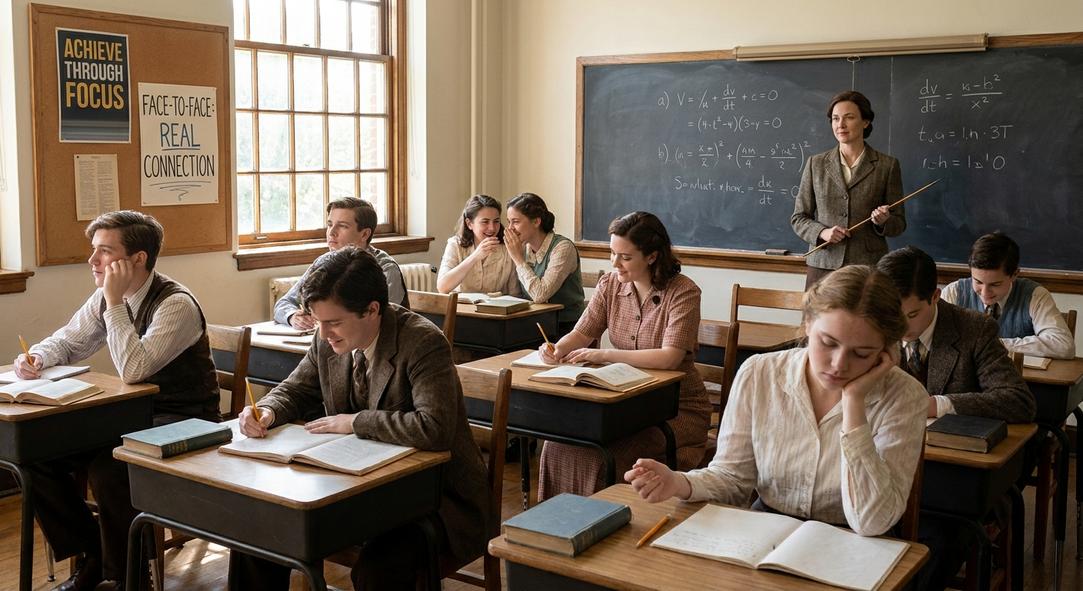
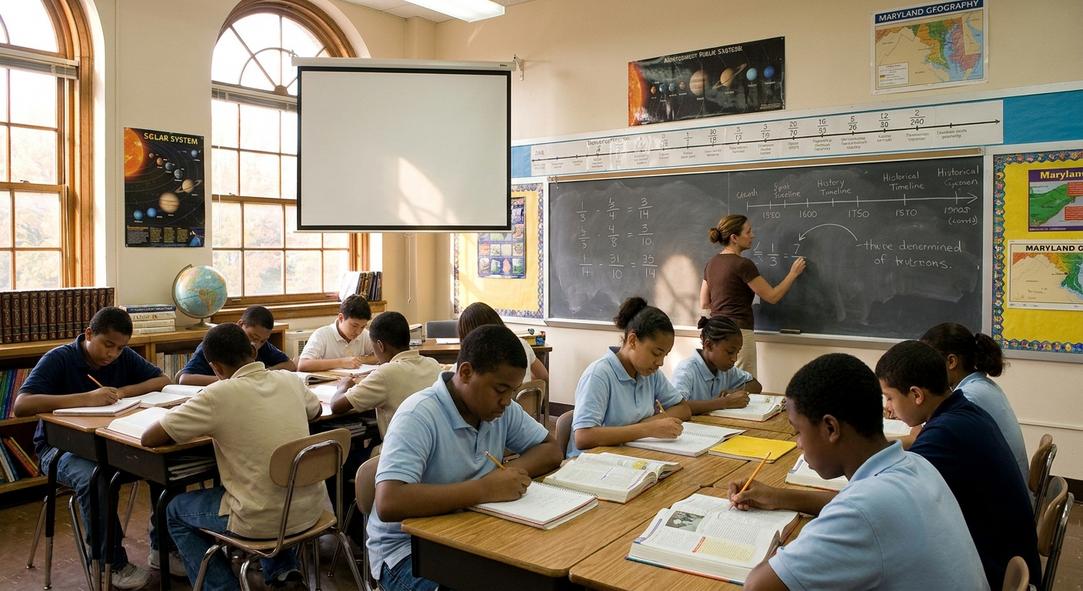
Let’s not overlook the “other screen”—the chalkboard—reminiscent of an era when handwriting was a curriculum subject, yet today, considered a relic. The educational arena once filled with chalk dust is now a stage where tech should, arguably, be the protagonist, not a mere spectator.
Confronting the Silent Menace
The policy intends to address the “silent menace” of distraction. But is banning cellphones an enlightened choice, or merely an evasion of a more complex issue? Consider the potential of these devices—not just as distractions, but as portals to a universe of knowledge, communication tools, and even creativity igniters.
Reading e-books, solving algebra on apps, or partaking in virtual science experiments: all elements of the modern classroom that fuel the inquisitive mind. This ban might conserve attention but also stifle the kind of immersive learning these devices incite.
A Current of Change or Conservation?
To some educators, the policy presents an opportunity—a neat cutback of a cyclone of chaos into a controlled breeze. But to students and forward-thinking educators, it may seem as restrictive as an old Victorian dress—beautiful in theory, but impractical in execution. 🎓
As this policy unfolds this fall, it beckons a broader contemplation. Are we estranging students from potential, or shepherding focus back to its roots? Will this ban shape diligent scholars or merely nostalgia-driven educators? 🤔
Embracing Technology or Embracing Distractions? 🤖🤷♂️
The irony is profound. In attempting to cultivate concentration, MCPS may inadvertently prune both the weeds and blossoms of potential. The question that looms as heavy as Mary Shelley’s monster: Is progress truly present in absence? What does 21st-century learning look like when the century’s tools are left idling in backpacks?