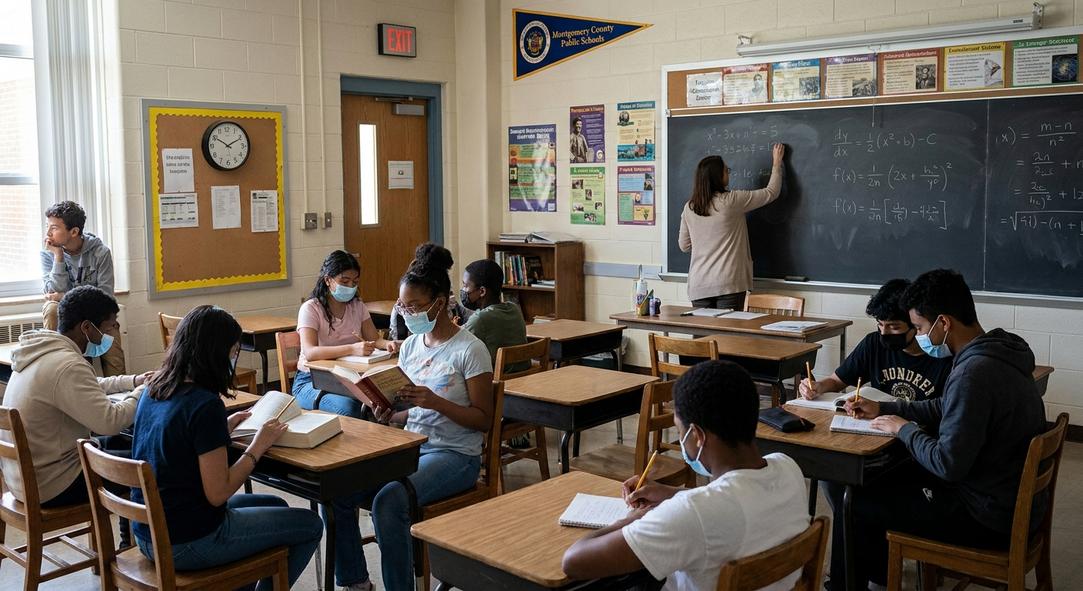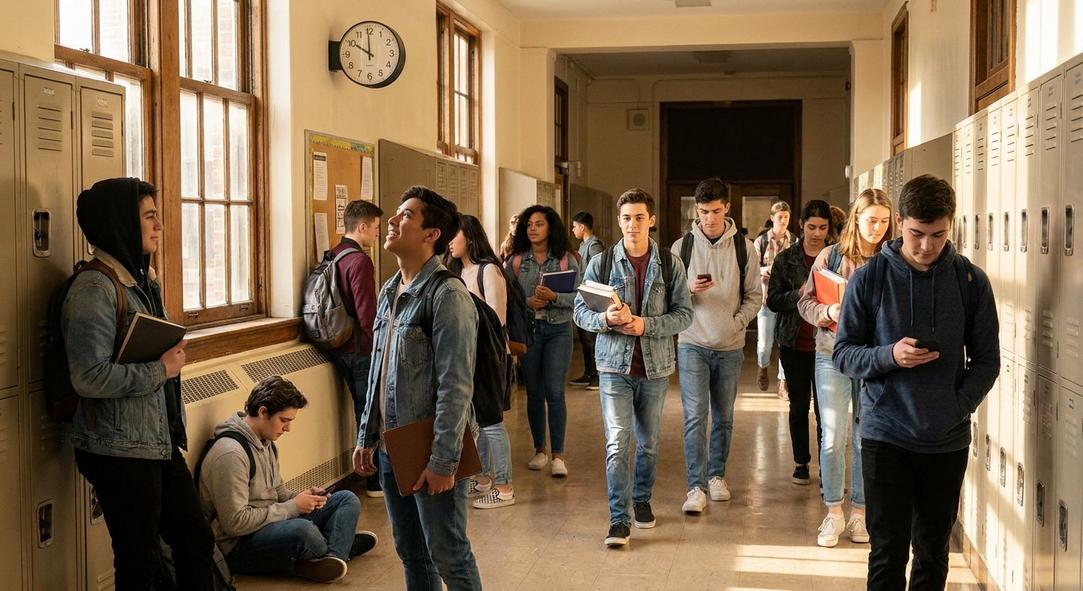







Montgomery County Public Schools to Enforce Bell-to-Bell Cellphone Ban This Fall 📵🍎
As autumn leaves begin to swirl in a kaleidoscope of colors, a silent revolution is set to unfold in the classrooms of Montgomery County Public Schools (MCPS). This fall, the district takes a bold step by enforcing a stringent bell-to-bell cellphone ban, a strategy poised to transform the educational landscape amidst our era of perpetual connectivity 🔗.
Once thought to be indispensable in the hands of students, cellphones are now the focus of intense scrutiny analogous to the once-celebrated, then vilified, presence of television in American family rooms. Their chirping notifications—like persistent crickets beneath a full moon—have long disrupted the sanctity of learning environments. Now, educators and administrators appear united in their mission to restore focus, advocating for a reprieve from digital distractions 📚 📚.
The New Educational Landscape
In juxtaposition to the liberating ambitions of digital learning tools, the cellphone ban could paint an ironic picture. As educational technology offers endless potential for interactive learning, it collides with its own byproduct—distraction 💡. The same device designed to connect and inform paradoxically threatens to dismantle the structure of focused study.
By implementing the ban, Montgomery County aims to elevate traditional learning experiences, freeing students from the hypnotic glare of screens 📵. One might wonder: could this return to basics bolster old-school face-to-face interaction, or will it yield an educational paradox where students, unanchored from their screens, drift without digital oars?
The Psychology of Focused Learning
Research suggests that the presence of mobile devices can significantly impair attention and memory retention. A study by the London School of Economics found that banning phones in schools improved test scores, with the most considerable increases noted among students who were previously underperforming. It seems the price of non-stop communication can be measured in diminished concentration and academic achievement 🔍.
Opponents argue this policy shift might only instigate a rebellion amongst smartphone-tethered youth, but supporters maintain that it’s a necessary disruption to reignite curiosity and knowledge as the core of academia. They liken the initiative to standing on academic shoulders of giants, seeing further into a future unburdened by incessant alerts and superficial scrolling.
Implementing Change: Practical Challenges
In a world where a day’s existence can seem determined by the latest post or a 240-character message, the enforcement of a cellphone ban is not without its challenges. Teachers and administrators, akin to modern-day Sisyphuses, must now roll the boulder of enforcement consistently uphill 🔕. What protocols, one wonders, will manage the transition, lest rules become more honored in the breach than in the observance?
Will the newfound quietude yield an environment ripe for focused scholarship, or will it echo with silent rebellion and unchecked fidgeting? Perhaps students will revert to scribbling notes in margins, an art form nearly lost in an ephemeral digital age, or maybe—just maybe—they will discover an ancient form of connectivity: looking up.
Rethinking Connectivity
As this policy matures, it ushers in a broader introspection on our complex affair with digital connectivity. Like a sea storm that both ravages and nourishes, technology’s role in education demands a careful balance 🌊. This initiative might reframe our understanding of when tech aids and when it inhibits.
As classrooms strive for harmony amidst the discord of multitasking, the ban stands as a testament to recognizing the human need for focus and empathy. Perhaps it whispers a crucial lesson—one not confined to textbooks but written in the very pulse of human attention 💬📘. Will this restriction sow seeds for deeper thinking, or does it challenge an archaic view of learning paths? Only time and test scores will tell.