






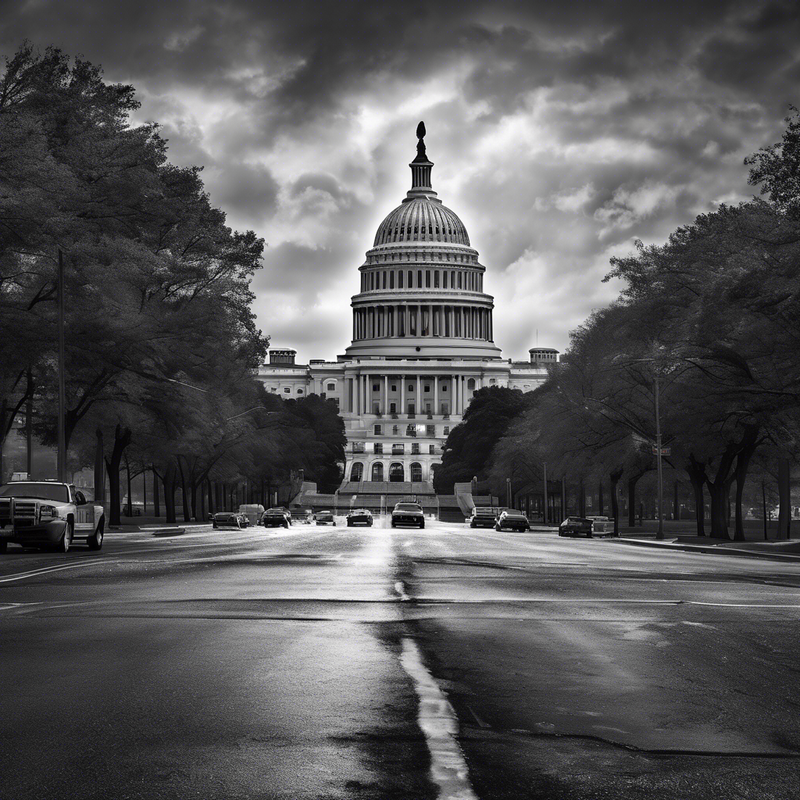
Are Trump’s Claims About ‘Dangerous’ Washington, DC Backed by Data? 🏛️🤔
In a city that boasts power brokers and political chess games, it is easy to forget the people living in the shadows of the Capitol dome. When former President Trump labeled Washington, DC, as “dangerous,” many took note, but how much of that narrative isn’t just a literary flourish? Are his assertions grounded in the troublesome data of rising crime rates and political dysfunction, or are they mere bombast, echoing like empty rhetoric in the grand halls of democracy? 📉
First, we must examine the claim from all angles, akin to dissecting a political riddle wrapped in a mystery inside an enigma. On one hand, crime statistics in Washington, D.C. have indeed fluctuated, presenting a complex tableau. For instance, while violent crime saw a peak in 2021, recent reports show a decline in homicides during 2022, implying that public safety may not be so tenuous after all. Contrastingly, property crimes have persisted with a stubborn consistency, feeding into narratives of an unsafe city—a striking antithesis, much like an image of the White House projected against the gritty backdrop of urban life. 🔍
The Numbers Game
According to the Metropolitan Police Department, the murder rate increased by 14% in 2021 compared to 2020, propelling Washington into national conversation. However, reports for 2022 suggested a 25% decrease in homicides and a stabilizing violent crime rate—an abrupt turn akin to a plot twist in a political thriller.📚
In 2023, the crime reports indicated that while the public’s perception may still tilt toward fearing for their safety, the numbers tell a more complex story. Over the past five years, property crime has remained higher, with burglary and theft steadily troubling residents.
Public Safety vs. Perception
Yet, as any cagey political consultant will tell you, perception is often more powerful than reality. Trump’s characterization stirs emotions, like a sudden downpour on a summer day, mirroring the fears and frustrations of many constituents who feel disconnected from the governing process. A significant question emerges: Is Trump merely capitalizing on public apprehensions, or are his claims representative of a more extensive breakdown in civic trust? 🕵️♂️
Moreover, public safety often intertwines with economic conditions, and D.C.’s wealth disparities present a sobering contrast—the opulent neighborhoods of Georgetown versus the under-resourced areas of Anacostia resonate with the stark contrast of affluence and adversity. Such socio-economic divides not only fuel crime but amplify the unease felt by citizens. A city that functions as the political heart of the nation still bears the scars of disinvestment and neglect. Thus, the question remains: Are these dangers an indictment of local governance or a reflection of broader societal fractures in America? ⚖️
Political Rhetoric vs. Reality
As Trump’s narrative suggests, the perceptions of danger and instability may serve as a hot button not just for community safety but also for political scorekeeping. It can scarcely be a coincidence that these narratives emerge amidst contentious political campaigns. Remarkably akin to a magician’s sleight of hand, these issues distract from pressing socioeconomic matters that are often left unaddressed. So, is Washington truly “dangerous,” or are we simply watching a masterclass in political rhetoric masquerading as public concern? 🎭
Looking Ahead
Voters are faced with a broader dilemma: distinguishing between political theater and factual civics. As the political landscape shifts, can leaders capitalize on tangible data to inform new policy initiatives that help bridge the divide, or will the cycle of blame and collateral damage continue to dance around the issues?
The call for deeper investigation is essential, elucidating the necessity for data-driven discussions that transcend fear-mongering. Like the intricate web of life that fills the gleaming halls of power, Washington, D.C., embodies both promise and peril. Perhaps it is critical to reevaluate the narrative we accept and to garnish our understanding not just with anecdotes but with comprehensive, contextual data. Only then can we discern the truth behind the claims—because a city’s spirit is as fragile as a whisper between the looming heartbeats of a bustling democracy. 💔


Im not buying Trumps scare tactics on DC. The numbers dont lie – lets stick to facts over fear-mongering!
I think its all about perception vs. reality here. Numbers can be twisted to fit any narrative. How do we separate facts from political rhetoric? 🤔
Hmm, Im not convinced! I think the perception of danger in DC may not match the actual data. Lets dig deeper!
I mean, can we really trust the stats on DC safety? Seems like theres more to the story… 🤔 #QuestionEverything
Are we buying into fear or facing facts? Lets dive into the numbers and challenge Trumps narrative on DC safety.
Is the fear of Washington, DC overhyped by politics or are there real stats to back it up? Lets dive in! 🏛️📊
I think its all about perspective. Data can be manipulated to fit certain narratives. What do you all think?
Are we letting fear dictate our perception of Washington, DC? Lets dive into the data and debunk the myths! 📊🏛️ #FactCheck